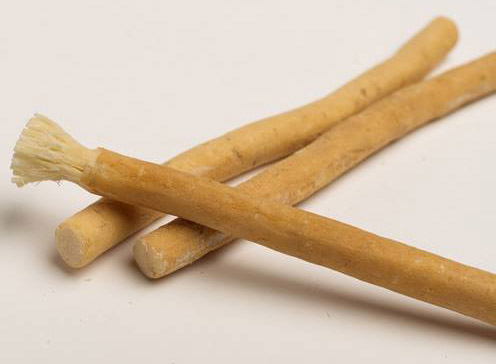
The miswak, a twig from the Salvadora persica tree, is also known by other names such as arak, peelu, and siwak. It serves as a tool for cleaning teeth and holds significant importance in Islam. This reverence stems from the Prophet Muhammad (peace be upon him) and other prophets regularly using it and advocating its use to their followers. This article presents evidence supporting this practice, the benefits of using miswak, and instructions for its use.
Evidence from Hadith
Numerous statements from the Prophet (pbuh) highlight the benefits of miswak, which are undisputed. He said, “Had I not feared hardship for my Community, I would have ordered them to brush their teeth for every prayer.” [Bukhari and Muslim], and “Brushing one’s teeth cleans the mouth and pleases the Lord.” [Bukhari]. The high regard for miswak in Islam is partly due to the emphasis on hygiene; according to the Prophet (pbuh), “Cleanliness is half of faith.” [Muslim].
Scientific Evidence
Research indicates that the bark of the miswak contains an antibiotic that suppresses bacterial growth and plaque formation in the mouth. Regular use also reduces plaque, gingivitis, and the growth of carcinogenic bacteria. Miswak naturally contains fluoride, astringents, resins (which protect enamel), and abrasives. A 2003 study comparing miswak use with ordinary toothbrushes concluded that the results were clearly in favor of miswak users. The World Health Organisation recommends the use of miswak.
Use of the Miswak
To prepare a miswak, cut away about 2cm of bark at one end to expose the fibers beneath. Chew this exposed section to soften the fibers for brushing. When the fibers wear out and the taste diminishes, cut them off and create a new ‘head’. Store it upright.
Before using the miswak, recite a short du’a (supplication). In English, it is, “O Allah, purify my mouth, enlighten my heart, purify my body, and make my body unlawful to the Fire.” Hold the miswak so the small finger and thumb are below it, with the remaining fingers above. Brush each area three times, or any odd number greater than three, and brush horizontally to avoid gum damage.
The use of miswak is beneficial at any time, but especially recommended before entering one’s house, before and after a journey, on Fridays, before reciting the Qur’an, before sleeping and after waking up, when experiencing hunger or thirst, and before entering any good gathering. Avoid using it in the bathroom or while lying down.
Hudaifah (may Allah be pleased with him) reported: Whenever the Messenger of Allah woke up, he would rub his teeth with miswak. [Al-Bukhari and Muslim].
Aishah (may Allah be pleased with her) reported: We prepared a miswak and water for wudu for the Messenger of Allah (pbuh). Whenever Allah wished to awaken him at night, he would brush his teeth with miswak, perform wudu, and pray. [Muslim]
Shuraih bin Hani (may Allah be pleased with him) reported: I asked Aishah, “What was the first thing the Prophet (pbuh) would do when he entered his house?” She replied, “He would use miswak.” [Muslim]
Islamic scholars suggest starting on the right side of the mouth and using a side-to-side motion, as up-and-down may harm the gums. It’s considered impolite to use miswak in front of others or in public. It should be washed after use. Hadhrat Aishah (may Allah be pleased with her) said, “The Prophet (pbuh) used to use miswak, then he would give it to me to wash. I would use it first, then wash it and give it back to him.” [Abu Dawood]
According to Abdullah Ibn Masood, the Prophet’s method of holding the miswak is as follows: “Place the small finger of the right hand below the miswak. Place the thumb below the head of the miswak. The remaining three fingers will be placed above.”


 Global Muslim Women
Leave a comment